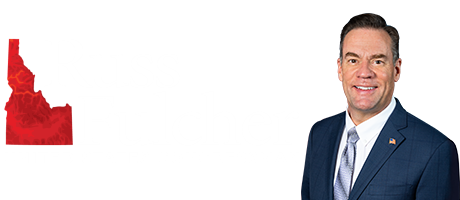
By U.S. Congressman Russ Fulcher
Agriculture is deeply woven into Idaho’s way of life. From our multigenerational family farms to the countless jobs that make up our agribusiness sector, agriculture reaches into nearly every part of the Gem State.
Yet while Idaho agriculture continues to evolve, federal regulations have too often failed to keep pace. Outdated, one-size-fits-all rules remain “on the books,” driving up costs and creating uncertainty for the very people who feed and fuel our great nation. Idaho’s cattlemen, in particular, need policies that provide herd protection and long-term stability, reduce unnecessary regulatory burdens, and support opportunities to compete in global markets.
As a fourth-generation Idahoan who grew up on a dairy farm, I will continue to do everything I can to ensure that the policies coming out of D.C. have the backs of our farmers and ranchers as I represent you in the U.S. Congress.
The newly enacted H.R. 1, the Working Families Tax Cuts, achieved multiple provisions to support our agriculture community. This landmark package delivered tax relief to protect generational family farms by increasing the estate tax exemption and making the small business deduction permanent. It also encourages grazing to prevent wildfire risk and increases the Livestock Indemnity Program (LIP) to 100 percent of fair market value for an animal that is lost due to a federally protected species—providing real relief and long-term certainty for Idahoans.
Other legislation we have made headway on is H.R. 845, the Pet and Livestock Protection Act, which recently passed the House and is now with the Senate for consideration. This bill rightfully restores authority to state lawmakers to responsibly manage gray wolf populations. In 2020, under President Trump, this initiative was achieved, and the gray wolf was delisted in the lower 48 United States due to clear data demonstrating success in restoring this species. But, in 2022, it was reversed by a California judge who moved to relist the gray wolf under the Endangered Species Act (ESA). By putting decisions back in the hands of Idaho’s wildlife experts, H.R. 845 provides assurance and protections for ranchers, farmers, and rural landowners. I have also advocated for legislation to remove the Yellowstone population of grizzly bears from the ESA through H.R. 281, the Grizzly Bear State Management Act. States—not D.C. bureaucrats—are best equipped to manage local wildlife.
An issue that continues to burden Idahoans is the federal estate tax, better known as the “death tax,” which unfairly affects family-owned businesses, ranches, and farms by leaving them no choice but to sell land and assets to cover the tax bill when a loved one passes away. In Idaho, over 95 percent of our farms are family-owned. Nationwide, that number grows to 97 percent. I am proud to co-sponsor H.R. 1301, the Death Tax Repeal Act, which would abolish the Death Tax. Family farms are the heartbeat of the Gem State’s communities, which is why I have also signed on to legislation to preserve the stepped-up basis tax provision. House Resolution 206 safeguards the generational transfer of family farms by preventing individuals from being crushed by high capital gains taxes on inherited assets such as land, buildings, or equipment. For cattlemen, this means peace of mind when it comes to transferring assets across generations.
While we have made great progress on a multitude of issues, there is a lot more to be done. I remain committed to advancing commonsense reforms that protect the economic well-being of U.S. producers and to ensure Idaho’s values and voice are heard in D.C. Thank you for the work you do every day to keep our nation fed, our Idaho strong, and our communities thriving.